
Can an Au Pair Drive Your Children? Licence, Insurance and Safety Checks
Before an au pair drives your child, verify licence recognition, insurer approval, car-seat safety and the route. Includes a worked example and backup plan.
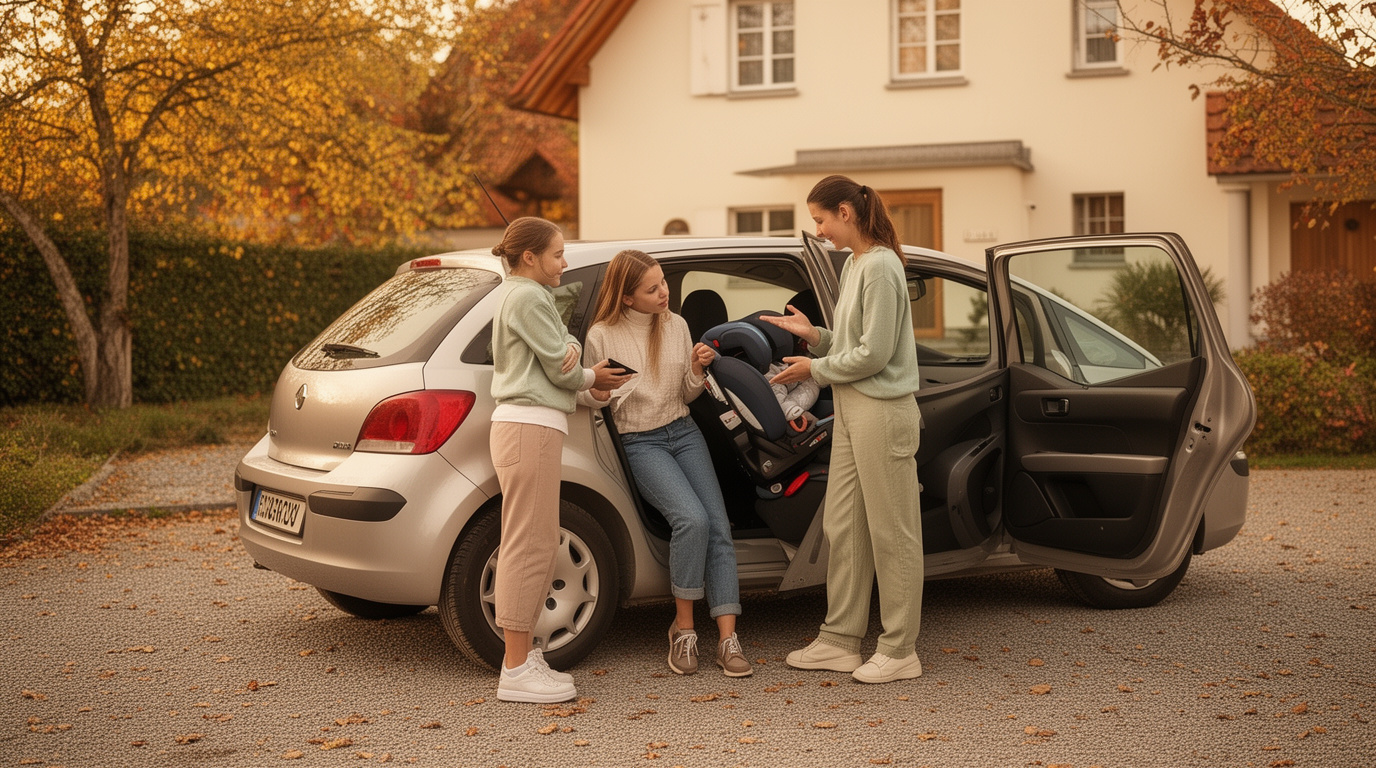
Yes, an au pair may be able to drive children, but only after three separate checks: the person is legally allowed to drive in that country, the particular driver and journey are covered by the relevant insurance, and the child can travel safely in the appropriate vehicle and restraint. A photograph of a driving licence does not establish all three.
Driving is not an automatic obligation of living with a host family. Discuss whether it is genuinely needed, whether the au pair is comfortable, how it fits the agreed duties and hours, and what happens when driving is not possible. This is a practical planning guide, not a substitute for local law or insurer confirmation.
1. Check the licence where the driving will happen
Ask which authority issued the licence, which vehicle categories it covers, when it expires, and whether any restrictions apply. Check the driver's residence status and the intended country of driving: visitor rules may differ from rules for a resident. Do not confuse an international driving permit, which may be required alongside a licence, with a replacement licence.
In the EU, valid EU licences are generally recognised across member states, but recognition of non-EU licences depends on national rules. In Great Britain, use the official non-GB-licence checker. In the United States, non-citizens should check the state motor-vehicle agency; some states also require an international driving permit. These are starting points, not blanket permissions for every au pair.
2. Ask the insurer about this exact driver and use
Before handing over keys, ask the vehicle insurer to confirm in writing whether this person may drive this car for the intended childcare journeys. Give the insurer the relevant licence, experience, age, residence and intended use details; ask whether the person must be named on the policy and whether limits, excesses or exclusions apply. Don't assume that compulsory third-party cover means damage to your own car is covered.
Ask how a collision or breakdown would be handled and who would pay any deductible. Keep the answer with your household documents; discuss it with the au pair before agreeing to the task. An employer, host family or platform cannot substitute its reassurance for the insurer's decision.
3. Check the child restraint, not just the driver
Check each child's height, weight and needs against the actual car-seat manual and the vehicle manual. Fit and demonstrate the seat properly, check fastening and harness use, and repeat the check after moving the seat or changing vehicles. Do not make the new driver guess the seating routine. Seek a qualified car-seat inspection where available.
Rules are country-specific. For example, in Great Britain children normally need an appropriate child seat until age 12 or 135 cm, whichever comes first. That UK rule must not be copied into a French, Swiss or US arrangement. The US National Highway Traffic Safety Administration provides detailed seat-selection and installation guidance.
4. Practise the route without children first
Start with a conversation about recent experience: city traffic, motorways, driving on the other side of the road, parking, winter conditions and operating this particular vehicle. If the driver is legally authorised and insured, a parent can accompany an unrushed practice drive to the school, activity centre or other genuine destination. Practise parking, safe drop-off points and alternative routes.
A supervised journey is familiarisation, not a driving qualification. If competence or comfort is uncertain, arrange professional instruction or another transport plan. Never pressure the au pair to carry children simply because a timetable is inconvenient.
5. Worked example: the Wednesday school collection
Fictional example: a family proposes a 15:30 school collection every Wednesday. The au pair holds a licence issued abroad and has driven regularly at home but has never driven this car. The parents do not add the journey to the schedule yet.
They first check the licence against the destination's rules. Next the insurer confirms the particular driver and use. A parent checks the correct booster seat and demonstrates the routine. They practise the route together, confirm the school's authorised-collector procedure, and identify a parent or trusted alternate for late trains, bad weather or a broken-down car.
If any check is still unresolved by Wednesday, the parent or backup collects the child. That is the intended decision rule, not a failure by the au pair. The time spent on an agreed childcare journey should be considered when reviewing the permitted schedule and local requirements.
6. Write a private handover sheet
Keep the information in a private place accessible only to people who need it. Avoid putting children's identifying details or exact collection times in a public family profile. Include:
Car and driver: insurer confirmation, vehicle details and a reminder of any restrictions; child safety: the correct seat, fitting instructions and relevant agreed care information; school: authorised pickup procedure and whom to call; journey: approved route and safe parking; problems: breakdown contact and emergency procedure; backup: the adult who takes over, with a second contact; boundaries: which trips have actually been agreed, and when driving is not expected.
Ask the au pair to explain the plan back in their own words and invite corrections. Review it if the vehicle, route, child's needs or agreed working routine changes.
7. Agree when driving will not happen
No journey should go ahead if legal recognition or insurance is uncertain, the restraint is unsuitable, the vehicle is unsafe, or the driver does not feel capable in the conditions. Stop and organise backup if illness, exhaustion, severe weather, an unfamiliar route or conflicting instructions create an avoidable risk.
Keep an alternative that does not depend on the same driver or car: a parent, an approved pickup person, an appropriate local service or a changed family schedule. Never treat the au pair's living in the home as permanent standby cover.
8. Decide together before writing it into your agreement
Discuss the real journeys, frequency, notice, vehicle access, insurance excess, fuel, parking, instruction costs and emergencies. Check the applicable au-pair programme, immigration and labour requirements before changing duties or hours. If driving is optional, say so clearly; if it is essential, disclose it before making a match.
AuPairsy helps host families and au pairs connect; matching does not verify a driving licence, certify insurance or guarantee a safe driver. Use a candid conversation and documented checks rather than profile claims alone. The most useful outcome may be deciding that childcare should be organised without driving.
Official sources and related AuPairsy guides
Rules and insurance conditions vary by jurisdiction. These official sources were checked on 11 November 2026; reconfirm before anyone drives.