
Practical guides
When Your Child Doesn't Warm to a New Au Pair: A Gentle Plan
If your child clings, withdraws or refuses a new au pair's help, try this gentle introduction plan, practical example and safety checklist.
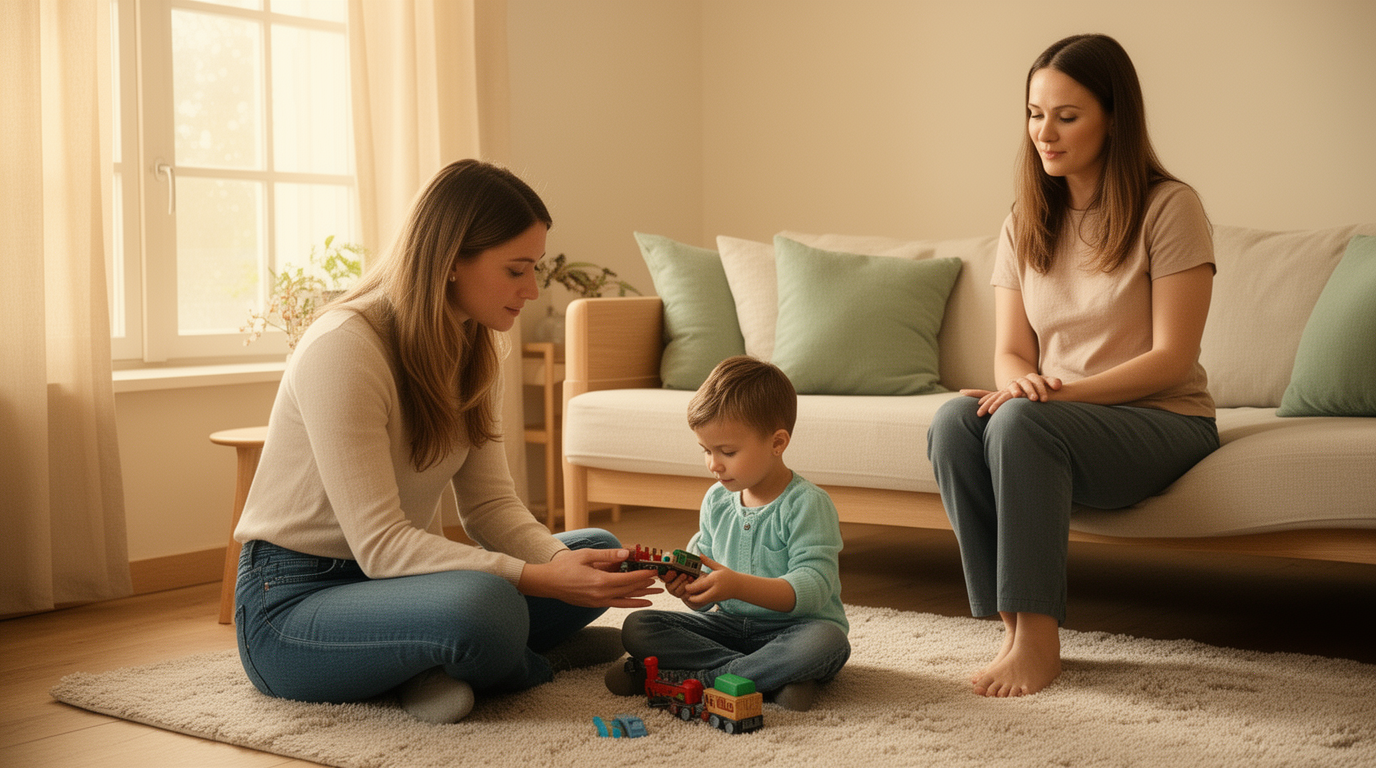
A child who hides behind a parent, refuses a game or says "I don't like the new au pair" is not automatically judging the person's suitability. A new adult has entered the child's home and changed familiar routines. Some children need time; others are communicating a problem worth investigating. Start by listening rather than forcing affection.
The aim is to create safety and predictability. The child should not have to hug, kiss, pose for photographs or play with a new adult on demand. Parents still make the adult decisions and remain responsible for safeguarding, orientation and backup childcare. A match is not permission to leave a child unsupervised, and any duties must comply with local rules.
Ask what feels different
At a quiet moment, ask: "What feels different when Leila is here?" Young children may show discomfort through clinginess or disrupted routines rather than explain it in words. An older child may mention a confusing instruction, language difficulty or feeling left out. Avoid leading questions, interrogation or calling the response "bad behaviour."
Tell the au pair privately that hesitation need not be a personal rejection. Discuss what the child normally enjoys and the boundaries the family respects. Give the child small choices---watching, drawing, a toy game---without making them responsible for the adult's employment or housing.
Before the first solo handover
UNICEF and the American Academy of Pediatrics advise a gradual introduction to a new caregiver. A familiar adult can make initial meetings feel safer, while the parent remains available to step in.
-
Explain in age-appropriate words who the new person is and which familiar routines will stay unchanged.
-
Privately share comfort routines, communication needs, allergies or other agreed care instructions and emergency contacts.
-
Arrange a low-pressure activity together. Watching without joining is acceptable.
-
Keep reliable adult backup. A friendly meeting is not evidence that the au pair has completed orientation or can perform every task.
Four stages, not four compulsory days
These stages are a flexible planning aid. Repeat or pause them according to the child's needs, the au pair's skills, the family's support and the rules in the destination country.
-
Together: the parent, child and au pair share a familiar room or activity; nobody pushes interaction.
-
Supported: the parent demonstrates a snack, bedtime preparation or game and guides the au pair through one routine.
-
Brief separation: only when there is a safe, agreed plan and an adult who can return promptly. Explain when you will come back rather than sneaking away.
-
Gradual responsibility: expand tasks only after everyone understands the routine, permitted duties and backup process.
Worked example: Mira and Leila
This family is fictional. Four-year-old Mira hides when Leila arrives. Leila sits nearby drawing while Mira plays blocks with her father. Nobody demands a conversation or hug. Mira eventually offers Leila a toy, and the father stays close.
The next day, the father shows the usual afternoon snack routine. Mira cries when he moves toward the door. Instead of pretending nothing happened or leaving secretly, he returns, acknowledges her feelings and arranges another shorter practice later. The useful decision is not a promise that Mira will settle by Friday; it is that the family adapts to observable comfort and safety.
What to say when your child says no
Try: "You don't have to hug or play with Leila. I hear that you want me close. I'll stay while we find something that feels okay. You can always tell me if something worries you." Tell the truth about any later goodbye and the expected return.
Ask the au pair about the moment privately and without assigning blame. Look for a concrete adjustment: simpler instructions, a quieter activity, food before a difficult transition, or more parent-led practice. Do not ask the child to reassure the adult that everything is fine.
When to slow down or stop
Ordinary caution is different from severe or worsening distress, remaining upset long after separation, or a child's report of threats, inappropriate touching or unsafe conduct. Never dismiss a safety disclosure as "just separation anxiety." Listen calmly, protect the child, avoid suggestive questions and use appropriate local child-protection or emergency services where needed.
The NHS recommends seeking professional advice if separation difficulties cause significant distress or continue for weeks. A child-health professional can help evaluate persistent difficulties. The NSPCC provides guidance on discussing worrying experiences with children.
A five-minute check-in
After early shared or supervised care, review observable events rather than personalities. Keep notes brief and private.
-
Child: "When did you feel comfortable? What was upsetting?" Playing or drawing may help.
-
Au pair: "Which instructions were clear? When should a parent step in?"
-
Parent: "Was our backup actually available? What single thing should change next time?"
A warm connection is not something to force on day one. The useful sign of progress is that adults notice, listen and can adapt responsibly.
Evidence and practical sources
UNICEF --- separation anxiety · NHS --- separation anxiety · American Academy of Pediatrics --- preparing for child care · NSPCC --- difficult conversations with children
Related AuPairsy guides
First-week welcome plan · Family readiness worksheet · AuPairsy country guides
This guide is educational, not a clinical assessment. Mira and Leila are fictional. The cover is AI-generated and does not depict an actual AuPairsy family.